

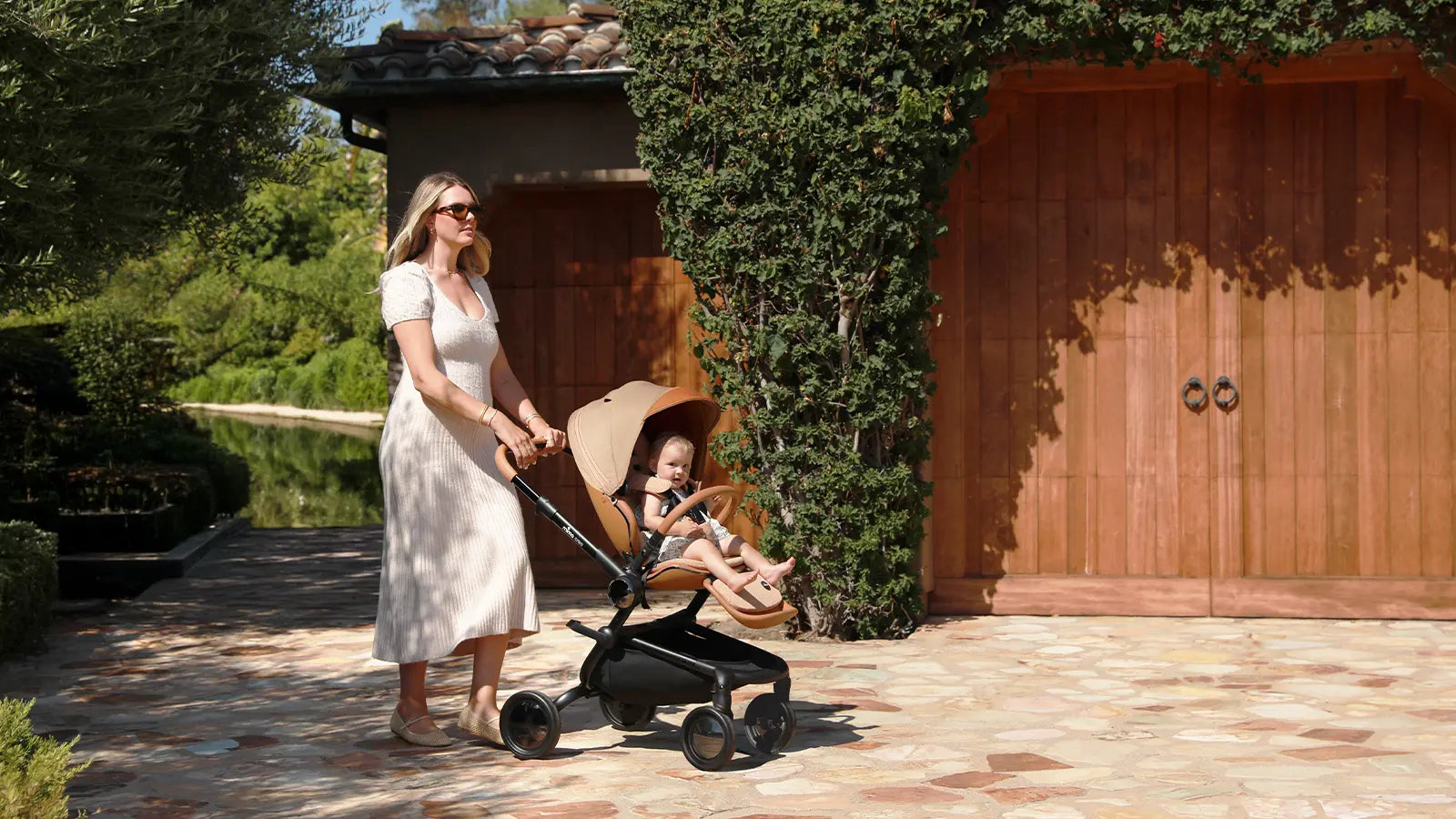
How to Choose a Stroller: What the Best One Needs
There is no single best stroller. There is the best one for the life you have, the car you drive, and the years ahead. The strollers that win roundups can still be wrong for you. This guide walks through what actually matters, so you can judge any model against your own week instead of a marketing line.
Start with how your family moves
Before getting into features, imagine a normal day for your family. How you move decides more accurately than any spec, because a stroller that fits your routine feels easy, and one that fights it never quite works.
Match it to the newborn stage
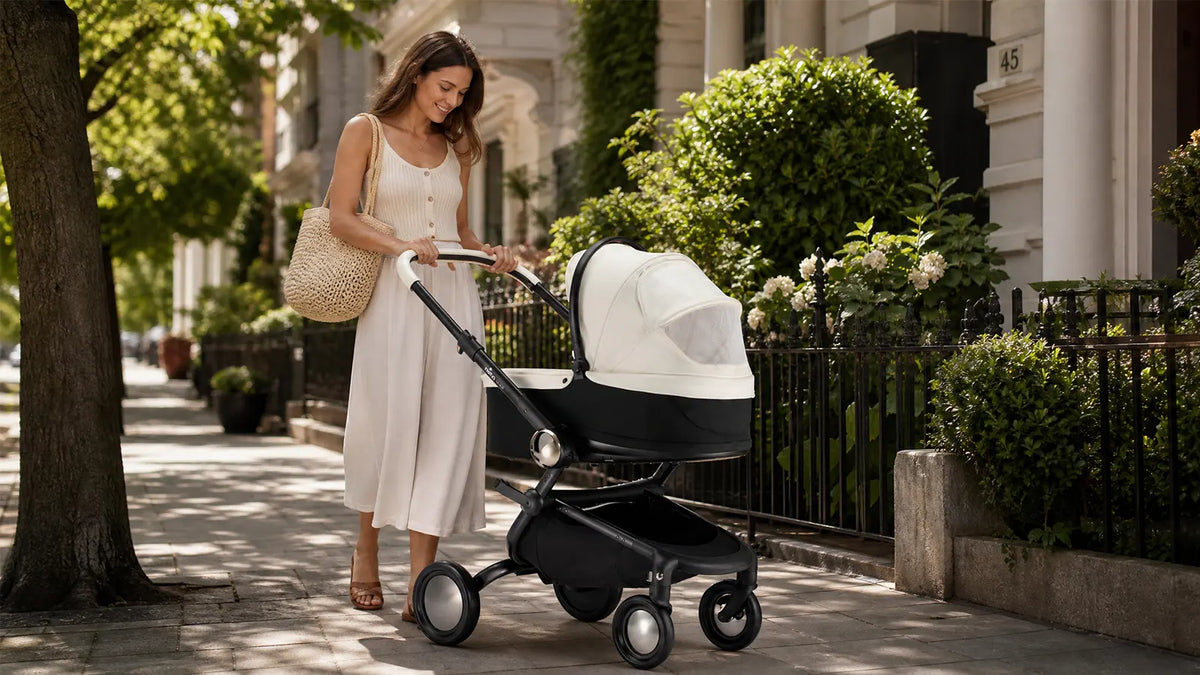
In the early stages, a stroller needs to have a bassinet, lie flat, or be compatible with an infant car seat, so a newborn’s head and back are fully supported at all times. Look for a full recline and a long backrest. If a car seat is central to your first year, check how cleanly the stroller accepts one, and whether it still earns its place once your baby outgrows the infant seat.

Check the seat, not just the frame
Two strollers can look alike and feel completely different once your child is in them. The seat is where the difference lives. A longer backrest supports a growing child on real outings, and structured support holds its shape instead of sagging over time. Cushioned support starts with structure, not just softness, so look past the surface pad to how the seat is built.
Look at the fold and where the stroller will live
The fold decides daily friction - a one-hand fold helps when your other hand is busy, while a city-friendly fold slips into a hallway or a small trunk. A compact fold matters most for transit and travel. Measure your actual space before you fall for a model, because the best seat in the world is no help if the stroller does not fit your life at home.
Think about the years ahead
A stroller you use for three years is better value than two you replace. Room to grow, a long backrest, and an adjustable seat stretch a single stroller across the stages. Longevity is quiet, but it is one of the most useful things a stroller can offer.

The small things that make daily use easy
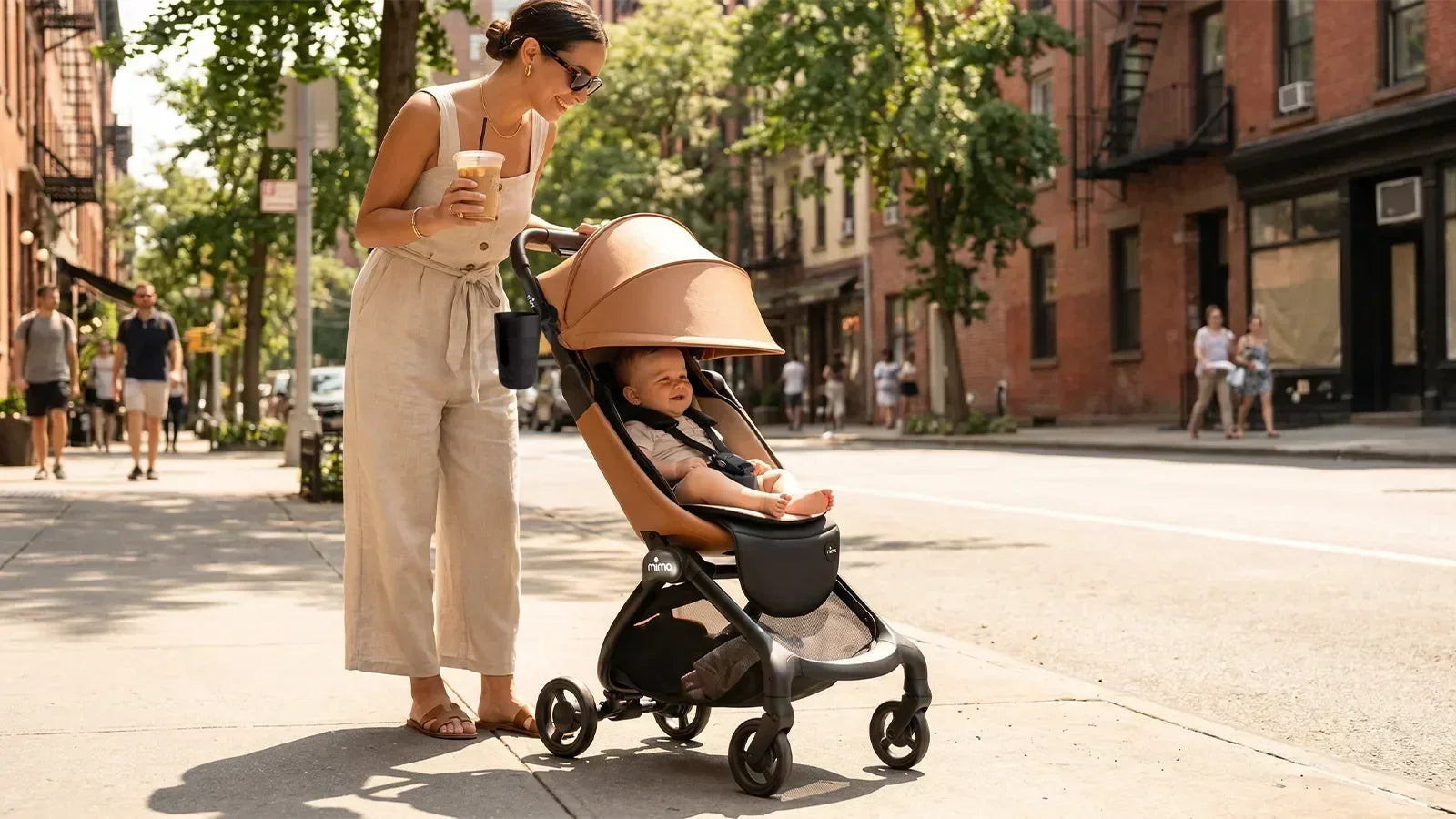
The details you touch a hundred times a week matter more than the ones on the box. A magnetic harness is faster to secure when you are getting out the door. A removable cushion makes care easier when you need it. Smooth maneuvering turns a tight shop or a busy sidewalk from a struggle into a breeze. These are the moments a stroller either helps with or gets in the way of.
A quick checklist
Use this to judge any stroller against your own routine.
|
Factor |
Ask yourself |
|---|---|
|
Daily use |
City and transit, or car and trunk? |
|
Newborn stage |
Does it lie flat or take a car seat? |
|
Seat support |
Long backrest and structured support, or a thin pad? |
|
Fold and storage |
Does it fit my car and my home? |
|
Longevity |
Will it still fit my child in two years? |
|
Everyday ease |
Harness, cushion, and maneuvering that help, not hinder? |
How mima approaches it
mima makes three strollers, each built around a different way to move. The xari Max leads with iconic design and a higher seat that keeps baby closer. The creo gives more room to grow with a city-friendly fold. The miro stays compact for travel, cushioned when needed and ventilated when warm. All three share signature design on the outside and cushioned support on the inside, so the choice comes down to your routine, not a trade-off between looks and support.
The best stroller is the one that easily adapts to your day. Judge by your week, and the decision gets simple.

Frequently asked questions
How do I choose the right stroller?
Start with how your family moves each day, then match the stroller to it. City and transit point toward a compact stroller, while car routines and longer outings point toward a full-size or travel system. From there, check the seat support, the fold and storage fit, and whether it will still be large enough for your child in a year or two.
What is the most important thing to look for in a stroller?
The seat, more than the frame or the features on the box. A long backrest and structured support keep a child comfortable on real outings and hold up over time. After that, the fold and everyday details, like the harness and maneuvering, decide how easy the stroller is to live with.
What is the best stroller for a newborn?
One that lies flat, has a bassinet or works with an infant car seat, so your newborn’s head and back stay supported. A full recline and a long backrest matter most in the early months. Full-size strollers and travel systems both handle the newborn stage well.
Is an expensive stroller worth it?
It depends on how long you use it and how much daily friction it removes. A stroller that fits your routine, supports your child for years, and makes everyday moments easier can be better value than a cheaper one you constantly need to replace. Judge by fit and longevity, not price alone.

Leave a comment
This site is protected by hCaptcha and the hCaptcha Privacy Policy and Terms of Service apply.